Where it goes wrong in practice
The shoot day is the bottleneck
Booking a photographer, model and location takes weeks, and by then part of the collection has already changed. New items go online in the meantime with a supplier photo — or not at all.
Standalone AI images aren't a catalogue
Free tools can produce a decent single image. But every image has a different face, different light and a slightly different white — and a webshop where every item looks different looks like a flea market.
The work only starts after the image
Title, description, meta fields, alt text, material and care instructions — per item, and in multiple languages if you sell across borders. That's the half a day per item nobody counts.
What you actually get from an AI photoshoot
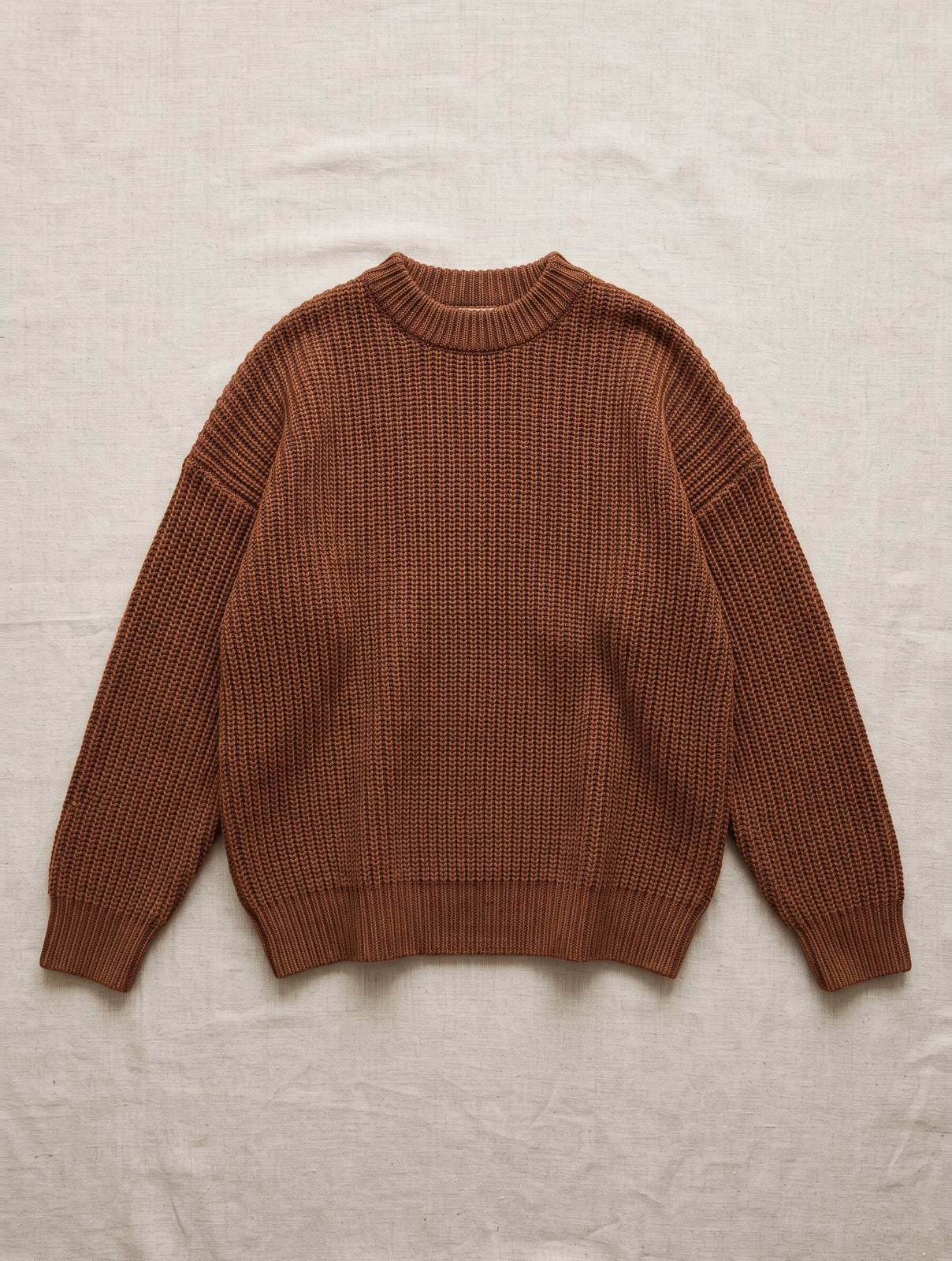
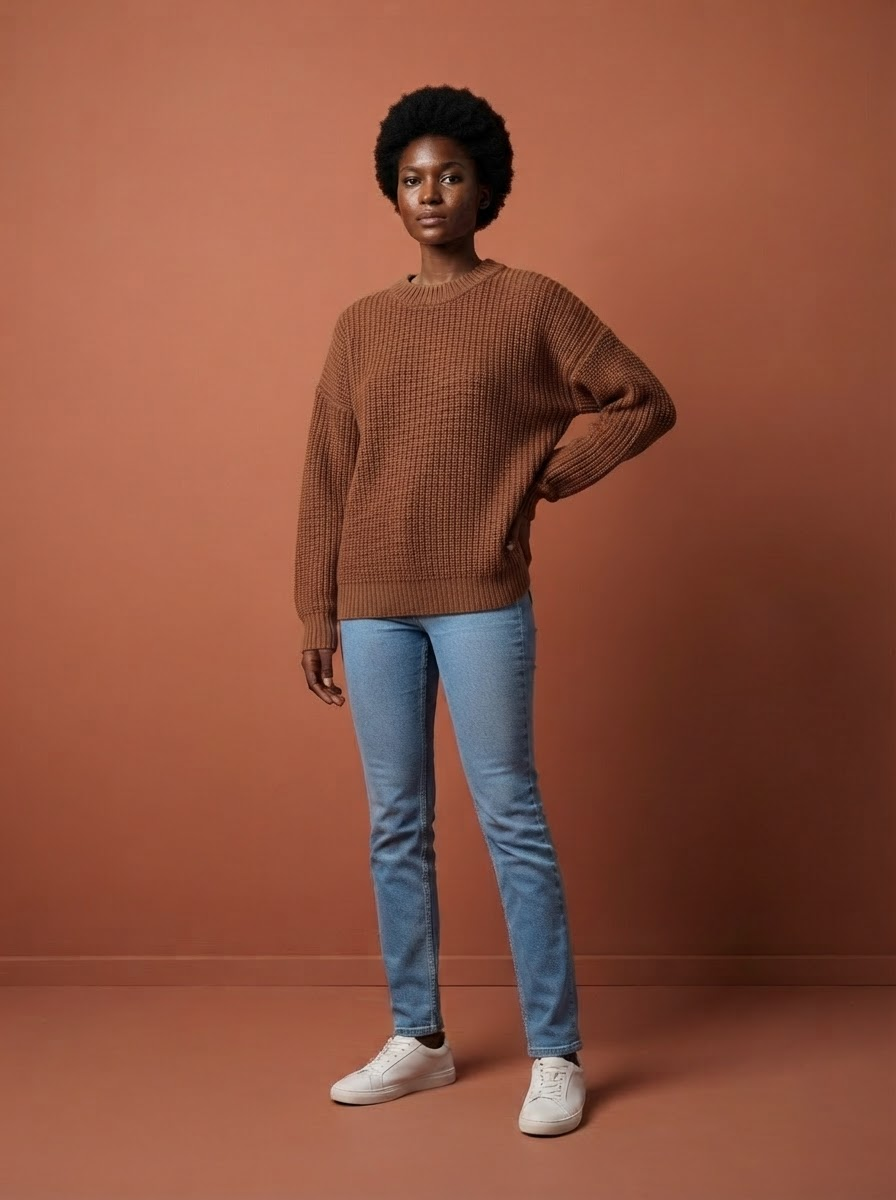
You drag in one photo — flat lay, on a hanger or on a mannequin. We recognise what it is and build the complete set.
- Model shots in multiple poses, on your fixed model — every next item wears the same face
- A packshot without a model — the one image that legally needs no AI label
- Detail photos of fabric and finish
- All the copy: meta title, description, short and long text in four languages, plus alt text and size info
Honest talk: when an AI photoshoot isn't the right choice
We'd rather not sell this to someone who'll regret it. Three cases where you're (still) better off choosing something else:
- Couture where the drape is the product — A handmade dress worth € 2,000 sells on how that one cut moves on a body. That deserves a real shoot — and with that margin, the budget is there too.
- You already have perfect, consistent studio photography — Then this doesn't solve a problem. Come back for your next collection, or just use the copy.
- You want a recognisable real person as your model — That's only possible with their consent, and the image then does fall under the visible AI Act disclosure requirement. We check for this — an uploaded face without consent gets rejected.
Why quality control is the real difference
Every AI tool occasionally produces a failed image — odd hands, a shifted print. The difference is in what happens next. With us: a photo that didn't turn out doesn't count; your balance is restored automatically. And the garment itself isn't left to a generator's imagination but transferred from your photo, so print, stitching and colour survive the toughest scrutiny — in our final test, six categories, from a folded sweater to a blazer on a rack, all came through correctly eight out of eight times. The full measurements are on the blog.
In three steps
- Upload one photo. Or shoot it on the spot with your phone — daylight is enough.
- Pick your style once. Your models and your lighting. After that, FashionPix never asks again.
- Download or publish. Straight to Shopify, WooCommerce or Lightspeed — or as an export file.
Shoot day or AI photoshoot
| Turnaround | weeks of planning, then a day of shooting | ± 90 seconds per item |
| Cost per item | € 60 – € 100 | 4 photos (± € 1.16) — copy in four languages included |
| Copy and translations | arrange separately | free with every item |
| Failed image | the day's already paid for | automatically refunded |
| Extra pose | new shoot | one click — 1 photo |
Frequently asked questions
Does my garment stay exactly the same?
Yes — that's the whole point of how it works. The actual garment is transferred onto the model; buttons, seams, print and colour stay as they are in your photo. Measured across six categories, even with deliberately poor input photos: 8 out of 8 correct.
What if an image fails?
Then it doesn't count — your balance is restored automatically. No email needed; it's a front-page promise.
Are the images royalty-free?
They're yours, unlimited commercial use. The models are made-up people: no model release, no expiring rights, no additional fees.
What does a complete catalogue cost?
One item is 4 photos. A hundred items come to 400 photos: about € 116 at the subscription rate of € 0.29 per photo, or € 160 in one go for 500 photos. /prijzen has a calculator that works it out for your numbers.
Do I need to add an AI disclosure to my photos?
The machine-readable marker is included automatically — we handle that. A visible disclosure is only required when imitating a real person; our made-up models don't fall under that. Read the full explanation at the AI Act for webshops.
Read more
- Product photos for Zalando
- Work clothing photography
- Coat photography
- Jeans photography
- Moet je AI-foto’s melden? De AI Act uitgelegd
- Model photos
- FashionPix — Model photos for your webshop, from one photo of your garment
Try it with your own item
Your first model photo is free, no account and no credit card. You keep it, even if you take nothing else.